Guest co-author: Jacqueline McGinn, Founder of Aurora Leadership, BVC Senior Associate
Co-author: Lynn Bennett, Managing Director, Advisory, BVC
This is the first in a series of written responses to questions raised at BVC’s April 2026 webinar, The Culture Advantage: Strengthening Strategy, Leadership, and Risk Resilience, hosted by Lynn Bennett, Managing Director, Advisory at Barrett Values Centre, and Jacqueline McGinn, Founder of Aurora Leadership and BVC Senior Associate.
The questions that came in during that session were substantive. This series works through the most important ones, drawing on the frameworks and practical experience that Jackie and Lynn bring to this work. New instalments publish monthly.
Q1: Could Jackie give some examples of culture risk, beyond Enron?
The most instructive examples of culture risk are rarely the catastrophic, headline-grabbing ones. The cases below are useful precisely because they show culture operating as a quiet but decisive force: in one instance as a strategic asset, and in another as a decision filter under pressure.
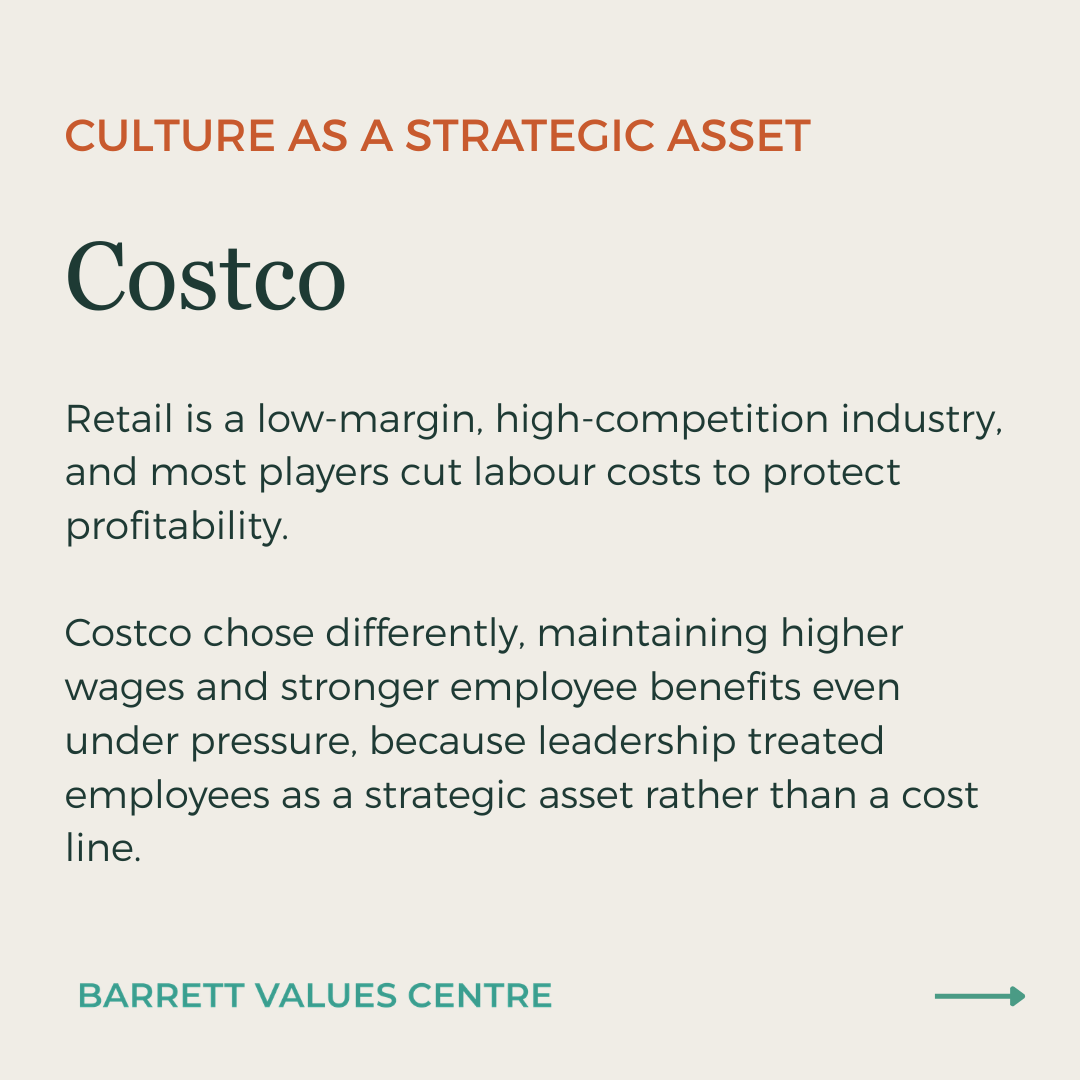
Costco: culture as a strategic asset
Retail is a low-margin, high-competition industry, and most players cut labour costs to protect profitability. Costco chose differently, maintaining higher wages and stronger employee benefits even under pressure, because leadership treated employees as a strategic asset rather than a cost line.
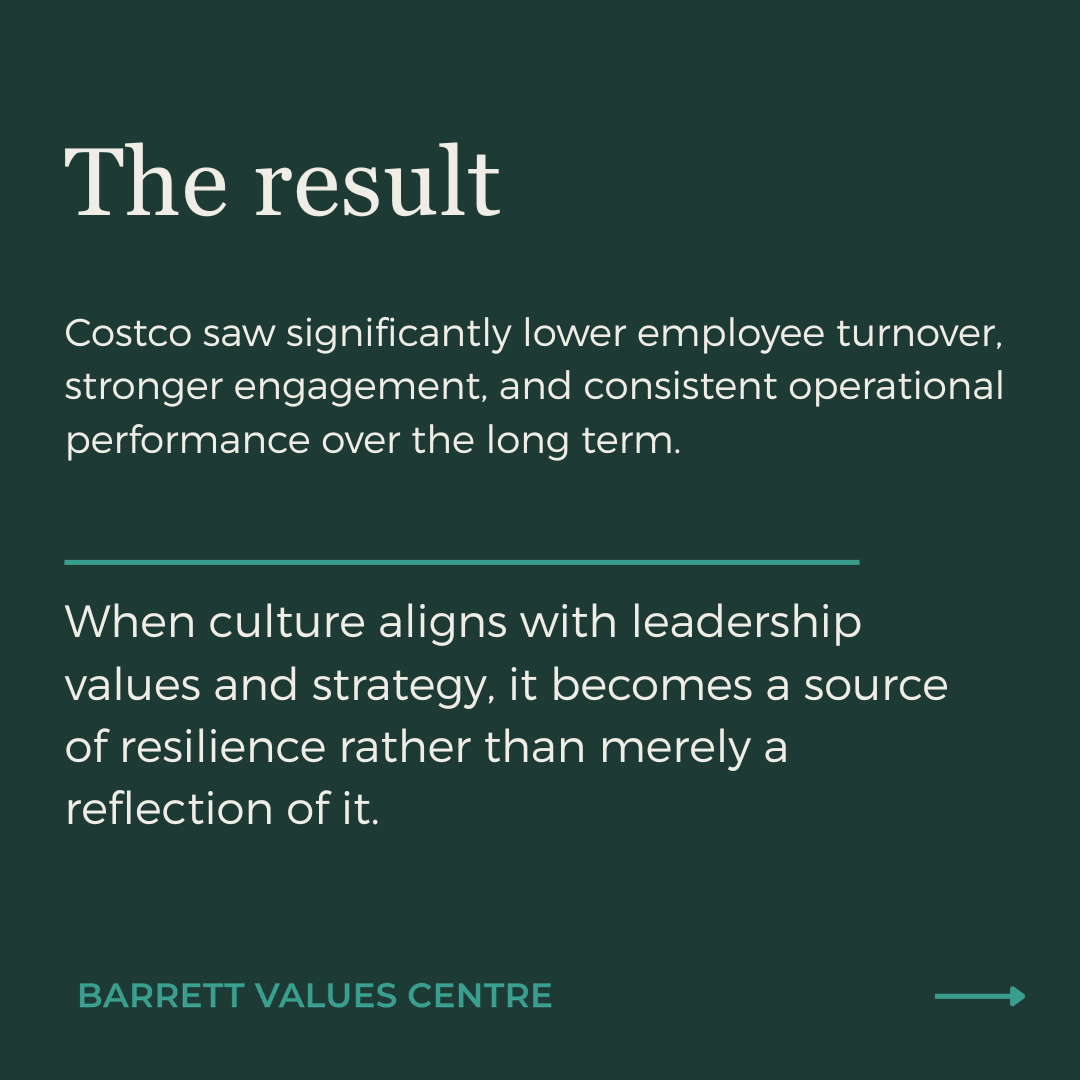
The result: significantly lower employee turnover, stronger engagement, and consistent operational performance over the long term. When culture aligns with leadership values and strategy, it becomes a source of resilience rather than merely a reflection of it.
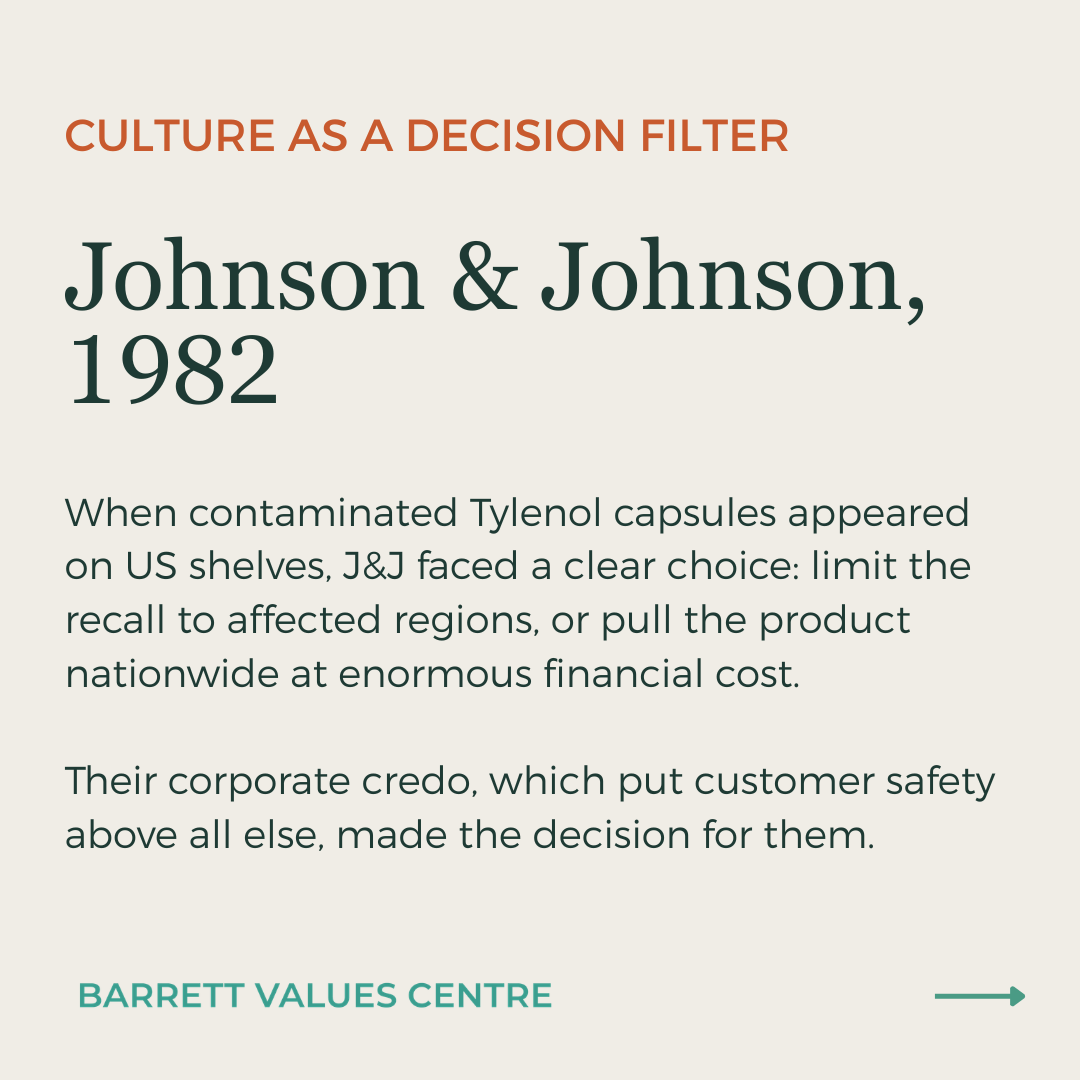
Johnson & Johnson, 1982: culture as a decision filter
When contaminated Tylenol capsules appeared on US shelves, Johnson & Johnson faced a clear choice: limit the recall to affected regions, or pull the product nationwide at enormous financial cost. Their corporate credo, which put customer safety above all else, made the decision for them.
The recall was costly in the short term. It was also the decision that rebuilt public trust and restored the brand. Values did not override the strategy; they were the mechanism through which the right decision became clear.
If you didn’t catch our webinar live, you may view it by signing up for access to all of our webinars and videos here.
Next in the series: What leaders can control.